

It can be hard to figure out how to make a home gym that really works. The pieces—barbells, benches, and weights—are easy to understand, but putting them all together in a small garage or basement is the hard part. Lifters want a complete power cage that is safe and can be used for a lot of different things, but they typically don’t have enough ceiling height or floor area. This is where the half rack comes in. It’s not a compromise; it’s a great solution that saves room. It strikes the right balance between the open experience of squat stands and the safety and stability of a much bigger rack.
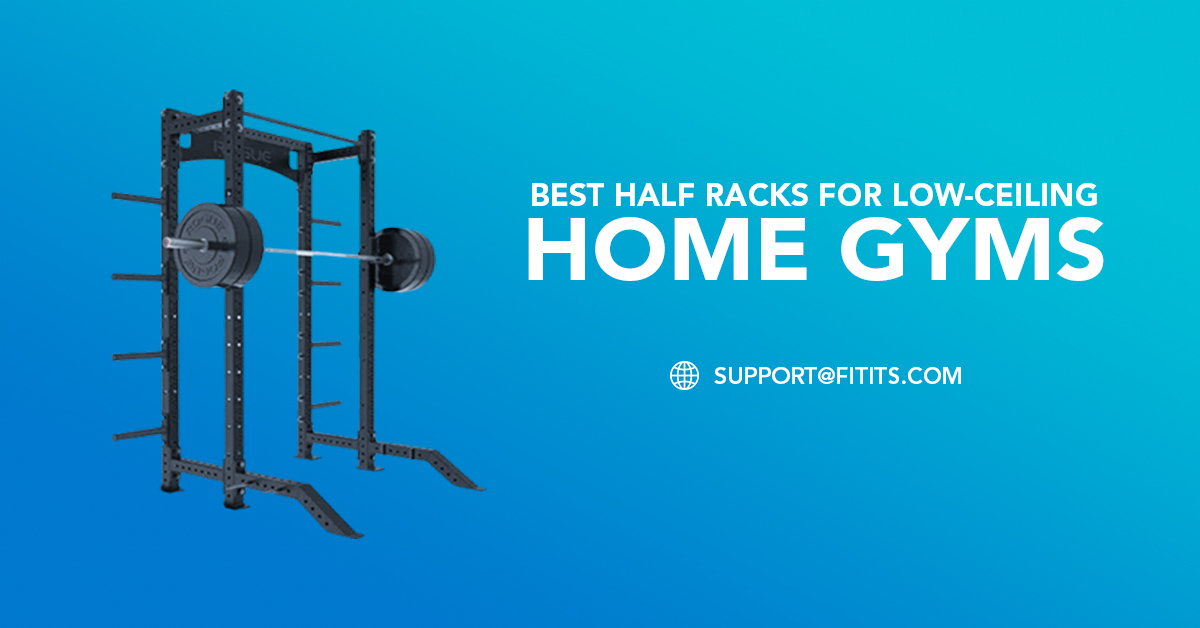
For the modern home gym owner, a half rack is the best choice. It has all the important characteristics for serious strength training, such strong J-cups to support your barbell, long safety spotter arms to catch a failed lift, and usually a pull-up bar for back development. And it takes up a lot less space than a full four-post power rack. This open design not only saves room, but it also gives athletes a sensation of freedom when they lift, which many of them like. Picking the best half racks for your home gym is all about getting the most out of your workouts without taking up too much space.
This complete guide will show you all you need to know about the half rack. We’ll look at the most important things that set a strong, dependable rack apart from a flimsy copy. We will look at the numerous types, from simple devices to heavy-duty commercial-grade units, and go over the best ones on the market. By the end, you’ll know everything you need to know to choose the best compact squat rack that fits your space, budget, and strength goals.
The Open-Air Advantage: How a Half Rack Made Kevin’s Gym More Roomy
Kevin, a 41-year-old high school teacher, had a common problem with his garage gym. His one-car garage had to be a workshop, a place to store things, and a place for him to work out. He really wanted to get rid of his old, shaky squat stands that he thought were only suitable for the weakest weights. He thought about getting a full power rack, but the idea of a big, four-post cage taking up all the space he already had was a no-go. It would make the garage feel small and cramped, and it would make it harder for him to do other things, like his carpentry hobby.
He felt trapped because he thought he had to pick between safety and room. He came across the idea of the current half rack while looking at other options. He liked the open design because it looked like it would provide him the safety of spotter arms without the restrictions of a full cage. After taking precise measurements, he bought a heavy-duty, flat-foot half rack with long safety arms and built-in plate storage.
His view of his gym changed completely the day he set it up. The half rack felt quite sturdy and safe, yet it took up a lot less floor space than he thought it would. He felt safer the first time he benched with the long spotter arms set just below his chest than he ever had with his old squat stands. He could now push himself to do that last muscle-building rep without being afraid.
The open design was a big surprise. He didn’t feel trapped. He could simply slide his bench in and out, and there was enough of space to work out outside the rack. The built-in weight plate storage was a huge plus. It got rid of the mess of plates that had been all over his floor and made the rack even more stable. His workouts got harder and more useful. He was squatting more weight, pressing with greater confidence, yet his garage still felt like a useful, multi-purpose room. Kevin realized that having the correct tools doesn’t mean you have to make a trade-off; it means you have a better way to do things.
Half Rack Dissected: The Plan for a Small yet Powerful Machine
A half rack may look easier to use than a power rack, but the way it is built is just as important for safety and performance. These are the most important things to look for when choosing the best half racks for your home gym.
1. Steel and construction are the most important parts of stability.
A half rack needs to be very stable because it doesn’t have the four-post framework of a complete cage. It’s all about the quality of the materials and the design.
- Steel Gauge: This number tells you how thick the steel tubing is. The steel is thicker and stronger if the number is lower.
- 12-gauge steel is a good choice for a lot of mid-range half racks. Most home gym lifters will find it to be very strong.
- 11-gauge steel is the norm for commercial use. This makes it stiffer and gives you the impression of being completely “planted.” For a heavy-duty half rack that will be used for really heavy lifting, 11-gauge is the best choice.
- The size of the vertical steel tubes is very important for stability.
- 2″x3″: A size that works well for half racks and is extremely frequent. It is strong.
- 3″x3″: The best choice. The 3″x3″ 11-gauge steel frame is very solid and strong since it has a larger surface area. It doesn’t swing or wobble at all.
- Base Design: The base is very important.
- Flat-Foot Design: A lot of new half racks have this characteristic. The base goes forward and backward, making a broad, stable footprint that doesn’t need to be bolted down. This is great for people who rent or don’t want to drill into their concrete.
- Bolt-Down Design: Some half racks are made to be bolted to a concrete floor or lifting platform. This gives you the most stable level possible.
2. Safety Spotter Arms: The Feature You Can’t Live Without
This is the most crucial part of a half rack. They are what make it a safe way to lift without a spotter.
- Length: The spotter arms ought to be long enough to catch the barbell if you drop it while doing squats or bench presses. Look for arms that are at least 20 inches long. A length of 24 inches is popular and quite safe.
- Capacity: The arms need to be able to withstand a lot of weight. They should be manufactured from the same heavy-gauge steel as the rack itself.
- Lining: UHMW plastic will line the arms of good spotters. If you have to set the bar down on them, this keeps the knurling on your barbell from getting damaged.
- Three. J-Cups and the flexibility to change them
- The way you prepare for your lift is important. The spacing of the holes and the J-cups affect how comfortable your workout is.
- J-Cups (J-Hooks): These are the hooks that hold the barbell in place. They need to have a thick UHMW plastic liner on both the bottom and the back, much like the spotter arms, to keep your barbell safe.
- The distance between the adjustment holes determines how accurately you can place the bar.
- 2-inch spacing is common on many racks.
- Westside Spacing (1-Inch): This is a high-end feature that features holes in a region of the uprights, usually in the bench press area, that are only 1 inch apart. This lets you set the bar height just right for your bench press, which is a big safety and performance benefit.
4. Features and attachments that work together
A excellent half rack is more than just two uprights; it’s a place to work out.
- Pull-Up Bar: A pull-up bar is a standard and important part of a half rack. To add diversity to your back workouts, look for a multi-grip bar that lets you hold your hands in several ways (wide, narrow, and neutral).
- Weight Plate Storage: This is one of the best things about a half rack compared to regular squat stands. The integrated storage horns on the back of the rack not only keep your gym tidy, but they also add hundreds of pounds of weight to the base of the rack, making it much more stable.
- Attachment Compatibility: See if the rack is part of a bigger system. Your gym will be far more useful and valuable in the long run if you can add things like a dip station, a landmine post, or band pegs.
The Best Half Racks for Your Home Gym on the Market
We looked at a lot of different models on the market and tested the best ones. These are the half racks that offer the best mix of functionality, stability, and price.
1. The Heavy-Duty Value King: REP Fitness HR-5000
The HR-5000 is a great illustration of how REP Fitness gives you commercial-grade functionality at a home gym pricing. It’s a strong, modular beast.
- The Specs: It is made of full 3″x3″ 11-gauge steel, can hold 1,000 pounds, has 1-inch Westside hole spacing, and has a huge base with optional weight storage wings. You may change it a lot by adding different pull-up bars and other things.
- The Feel: A real beast. This rack is just as stable as a lot of high-end full power racks. The steel’s weight and the large footprint make you feel completely safe when doing heavy squats and presses. It is almost impossible to move because you may add storage to the front and back.
- Why It Wins: It has the best “endgame” features (3×3, 11-gauge, Westside spacing) and is modular, all at a price that is much lower than its closest competitors. This is a rack that you will never outgrow.
- Best for: The serious lifter who wants a power rack’s solidity and a half rack’s open design, as well as a modular system that can be added to over time.
2. The Gold Standard: The Rogue SML-2 Monster Lite Squat Stand
This is a full-fledged half rack, even though the moniker “squat stand” could make you think otherwise. It is one of the most popular and recognized pieces of equipment in home gyms.
- The Specs: It’s made of strong 3″x3″ 11-gauge steel and comes with J-cups and a pull-up bar. When you add Rogue’s long spotter arms, which are a must-have, it may work as a full half rack.
- How it feels: rock solid. Rogue is known for making things with great precision, and this rack feels really stable and safe. The Westside hole spacing is a great feature that really improves your bench setup.
- Why It Wins: It opens the door to the huge Rogue Monster Lite ecosystem of attachments. The quality of the build is perfect, and it has a reputation for being quite durable. This is a piece of equipment that professionals use.
- Best For: Lifters who want a proven, bombproof rack, value American-made quality, and want access to a wide range of attachments.
3. The Force USA MyRack Modular Half Rack is the all-in-one solution.
Force USA has built a system that enables you build your ideal half rack from scratch, with a focus on accessories that work together.
- The specs say that it is made of 12-gauge steel and is 2.4″ x 2.4″. It can hold up to 2,000 pounds. The best part is that you may choose from more than 20 attachments, such as a lat pulldown/low row station, a dip station, and band pegs that all work together perfectly.
- The Feel: Very stable, even when there are weights on the back storage pegs. Having a completely integrated cable system on a small half rack is a big plus.
- Why It Wins: You can customize it in ways that no other product can, and it’s incredibly cheap. It lets you build a whole, multi-function gym on only one half-rack chassis, making it one of the most space- and cost-effective options out there.
- Best For: The person who owns a home gym and wants a training system that includes cable functionality and takes up less space in a half-rack configuration.
4. The Titan Fitness T-3 Series Short Squat Stand is a great value for money.
Titan Fitness is noted for making strong, high-quality equipment at a significantly lower price than other companies. The T-3 is a great way to get started with heavy-duty half racks.
- The specs are: 11-gauge steel, 2″x3″ size, Westside hole spacing, and a design that lets you transport it cheaply. It must be connected with their T-3 spotter arms to work as a safe half rack.
- The Feel: For the price, it feels really substantial and strong. The 11-gauge steel makes you feel safe, which is a big improvement than racks from cheap brands.
- Why It Wins: It offers heavy-duty 11-gauge steel and Westside spacing at a price that is easy to reach. It’s a great platform for someone who wants to grow strong but doesn’t have a lot of money to spend.
- Best For: The lifter who wants high-quality steel but doesn’t want to pay a lot for it, as well as premium features like Westside spacing.
Choosing Between a Half Rack and a Power Rack
This is a prevalent argument among people who create their own gyms. There is no one “better” choice; there is just the better one for you.
- Half Rack:
- Pros:
- Less Floor Space: Takes up less floor space, making it perfect for compact areas.
- Open design: It doesn’t feel as closed in or tight. Moving a bench in and out is easier.
- Flexibility: You can do lifts both inside and outside the rack’s footprint, including overhead presses.
- Disadvantages:
- Safety: It doesn’t give the whole cage’s 360-degree protection, which can catch a bar that falls backward. However, it is highly safe with the right spotter arms.
- Stability: A four-post cage is naturally less stable, although high-end ones with weight storage are very solid.
- Pros:
- Full Cage Power Rack:
- Pros:
- Maximum Safety: The four-post design is the safest because it catches the bar from any direction. This is the best way to train heavy by yourself.
- Ultimate Stability: The four-post structure is the most stable platform available, especially when it is bolted down.
- More Attachment Options: The extra two uprights provide you more space to attach things.
- Disadvantages
- Large Footprint: It takes up a lot more floor space and might make a room feel cramped.
- Confining Feel: Some lifters don’t enjoy the way it feels to be “in a cage.”
- Pros:
- The Verdict: A power rack is a great choice if you have the room and your top objective is to be as safe as possible while exercising alone. A high-quality home gym half rack is the best choice if you have limited room, like to lift in a more open setting, and still want to be very safe when doing squats and bench presses.
How to Get the Most Out of Your Half Rack: Tips and Workouts
Set the J-cups to shoulder height and the spotter arms to just below the bottom of your squat. The open design allows you a lot of space to move back.
- Bench Press: Put your bench in the rack. When your back is arched, put the spotter arms directly below your chest. This lets you move your whole body while keeping the bar from pinning you down.
- Overhead Press (OHP): This is one of the nicest things you can do with a half rack. You can do them standing in front of the rack, using the J-cups to hold the bar at the start, without a ceiling or top crossmember getting in the way.
- Pull-Ups: Use the built-in half rack with pull-up bar to its fullest. It’s the best tool you have for developing your back.
- Use the Storage: Always put your extra plates on the storage horns. It’s free stability!
Conclusion: The Smart Power Solution
The half rack is the next step in the smart progression of home gym strength equipment. It strikes the perfect mix between safety and the fact that there isn’t much room. It shows that you don’t need a huge cage that takes up a whole room to train hard and with confidence. It has a strong base, long safety spotter arms and all the important elements like a pull-up bar and plate storage. This makes it a full and powerful training center that is easy to get to and use.
Buying one of the best half racks for your home gym is a good way to make sure your workouts are safe, efficient, and productive. It’s a promise to get stronger that doesn’t bother your home. You can choose a heavy-duty modular system or a budget-friendly workhorse as your centerpiece. Both will support your heaviest lifts and help you become the strongest version of yourself for years to come.
Are you ready to select the right size and strength for your home gym? At Fitits.com, you can read our in-depth equipment instructions and training programs, or you can email our home gym experts at support@fitits.com for personalized help.
Questions that are often asked (FAQ)
Q1: What is the difference between a power rack and a half rack?
A half rack usually has two vertical posts, a base, and safety arms that face forward. You lift in front of the rack. A power rack (or power cage) has four vertical supports that make a cage that you raise inside of. The key difference is that a power rack is safer all around, while a half rack takes up less room and feels more open.
Q2: How much room do I need for a half rack?
A half rack is smaller than a power rack, usually about 4 feet wide and 4 feet deep. You still need to make room for a 7-foot barbell, which means you need roughly 10 to 12 feet of clear space. Because the front is open, you don’t need as much depth in front of the rack as you would with a cage. Always check the size that the manufacturer says it should be.
Q3: What kinds of workouts can I do with a half rack?
You can do all the basic barbell exercises that you can do with a power rack. You can do squats, bench presses, and overhead presses with the spotter arms, and they are all safe. Most models come with a half rack and a pull-up bar for back work. They are also useful for inverted rows and as a place to start barbell rows.
Q4: Is it safe to move large things by yourself on a half rack?
Yes, it is very safe to carry large things by yourself using a high-quality half rack that has safety spotter arms that are the right length and strength. For each movement, it’s important to situate the spotter arms in the right place, such just below the bottom of your squat or just below your chest on a bench press. They are a reliable safety net for the most likely points of failure.
Q5: Is a half rack stable enough on its own?
Most of the best modern half racks have “flat-foot” designs, which means they are quite sturdy even when they aren’t fastened down, especially when they include weight plates on their storage horns. This is more than enough for most lifters. Only top-level athletes who lift very large weights may need the bolt-down design’s full stability.
Q6: How much should I spend on a solid half rack?
You can get a good, sturdy small squat rack or an entry-level half rack for between $400 and $700. Models that are in the middle price range and are stronger, with more features and heavier steel, usually cost between $700 and $1,200. Depending on the layout and attachments, premium, modular, 3″x3″ 11-gauge half racks from well-known brands can cost $1,200 or more.