

The barbell is the most important piece of equipment in a home gym, but the weight plates are what keep it going. They are the real, scalable parts of resistance training that make you stronger. A good bar is important, but the plates you put on it will determine how safe, comfortable, and loud your workouts are. Many newcomers don’t realize how important it is to choose the appropriate ones. It affects everything from the exercises you can do to how long your floor and equipment will last.
The argument over which weight plates are better for a home gym (rubber, iron, or bumper) isn’t just about how they look. It’s a realistic choice between the loud clang of old iron and the quiet thump of new rubber. Do you require cast iron plates that are strong and take up little space? Or are bumper plates preferable for your training style and space because they are adaptable and save space?
This article will break down the special features of each kind of plate. We’ll look at the materials they are made of, how they are used, and the small differences that can make a big difference in your home gym experience. You’ll know how to choose the best set of weight plates for your home gym by the conclusion of this. They’ll help you get stronger for the rest of your life.
The Change That Made Everything Different: Mark’s Home Gym Changes Over Time
Mark had been working out in his garage for a year. He was pleased of his setup, which included a strong power rack, a good barbell, and a set of old, chipped-up iron plates he had bought used. He liked the ruggedness and the old-school feel. The loud clang of iron on the bar made me want to work harder. But his advancement was causing trouble.
His deadlifts were getting heavy, and every rep shook the whole house. His wife made a joke about the noise, but he was really frightened that he would break the concrete floor. He also wanted to learn the Olympic lifts, such the clean and jerk and the snatch, but he couldn’t drop his iron plates, even from his knees. He couldn’t move because of his equipment.
Mark opted to buy a full set of bumper plates after months of research. As soon as they got there, the difference was clear and huge. When he deadlifted 275 pounds for the first time, it didn’t sound like a crash that shook the house; it sounded like a soft, satisfying thud. He could work out in the morning without waking up his family.
More importantly, a whole new world of training opened up. He began doing power cleans to learn how to safely drop the weight. His workouts grew more active and athletic. The bumper plates didn’t just make his gym quieter; they also made it safer and more useful. The improvement turned his garage from a place to powerlift into a full-fledged strength and conditioning gym. This shows that the correct weight plates don’t just add weight to the bar; they also let you train more.
A Head-to-Head Comparison of the Anatomy of a Weight Plate
You need to know what makes each type of weight plate distinct before you can choose the best ones for your home gym (rubber, iron, and bumper).
1. Cast Iron Plates: The Old-Fashioned Choice
These are the old-fashioned, no-nonsense tools that people use to lift things. Most people think of weight plates as being made of solid cast iron and covered in enamel or gray paint.
- Pros:
- Durability: They are almost impossible to break. A cast iron plate built in 1950 works just as well as one made today.
- Slim Profile: The plates are thin because iron is so heavy. This lets you put more weight on the bar, which is very important for very strong lifters.
- Cost-Effective: They usually have the lowest cost per pound, which makes them a fantastic choice for anyone on a budget.
- The Sound: The metallic “clang” of iron plates is a strong incentive for many lifters.
- Cons:
- Noise: When they strike each other or the floor, they make a lot of noise.
- Risk of Damage: If you drop an iron plate, it might easily break your bar, platform, or concrete floor.
- Rust: The paint can flake off over time, letting the iron underneath rust, which is more likely to happen in a garage that is damp.
2. Plates for the bumper: The All-Purpose, Multi-Purpose Item
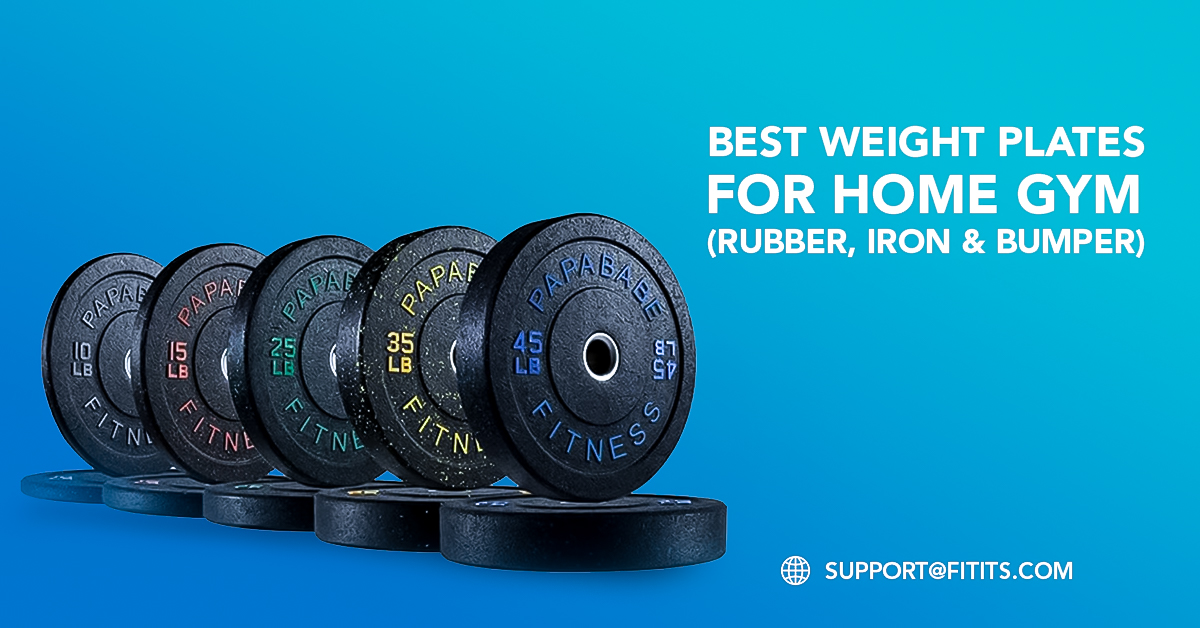
Bumper plates are made of solid rubber that has been shaped around a steel or brass hub in the middle. They were made particularly for Olympic weightlifting, which requires dropping the bar from above.
- Good things:
- Safety and durability: They are made to be dropped. This keeps the plate safe, the bar’s fragile sleeves safe, and your floor safe, and it lowers the chance of getting hurt if a lift falls.
- Less Noise: They are far quieter than iron, which makes them great for home gyms, flats, or working out at strange times.
- Versatility: They let you do more kinds of exercises, such Olympic lifts, CrossFit-style workouts, and heavy deadlifts that you can drop hard.
- Standardized Diameter: All bumper plates that weigh 10 lbs/5 kg or more have the same diameter. This makes sure that the bar is at the right height for deadlifts and cleans, even with smaller weights.
- Disadvantages:
- Thicker Profile: The plates are substantially thicker since rubber is less dense than iron. This indicates that the bar can’t hold as much weight. (But this is only a problem for top-level lifters who can lift more than 500–600 pounds.)
- Price: They cost more than regular cast iron plates.
- Bounce: Bumper plates that are cheaper may bounce too high and out of control, which could be dangerous.
3. Iron plates with a rubber coating: the hybrid option
These plates are a good compromise. The core is made of cast iron and is completely covered by a layer of rubber.
- Pros:
- Some Protection: The rubber layer protects the plate and your flooring more than bare iron does. It also makes a lot of noise less.
- Grip and Looks: They often include built-in grips or handles that make them easier to carry and load. The rubber coating also stops corrosion.
- Thinner than Bumpers: The core is made of iron, so they are thinner than full bumper plates, which lets you add more weight.
- Cons:
- Not for Dropping: This is an important difference. They are NOT bumper plates, even if they are covered in rubber. The iron core can break, and the impact can still hurt your bar or floor. They aren’t made for lifting in the Olympics.
- Durability of the coating: The rubber on cheaper versions can break, peel, or tear over time.
- Odor: Rubber that isn’t as good might smell really bad and take weeks or months to go away.
What Plates Are Best for You? A Guide Based on Scenarios
Your training style, surroundings, and money will determine which of these possibilities is best for you.
You Should Pick Cast Iron Plates If
- You are a powerlifter or train like one. Your training is mostly on the “big three”: the squat, the bench press, and the deadlift. You don’t let go of the bar.
- You don’t have a lot of money: Iron is the cheapest way to get the most weight.
- You Need to Load the Most Weight: You are an advanced lifter who can lift a lot of weight (more than 500 pounds) and needs the narrow shape of iron to fit it all on the bar.
- You train at a place where noise and damage to the floor aren’t a problem: You have a special platform or heavy-duty mats in your garage or basement.
If you want to use bumper plates, you should
- If you do Olympic lifting or CrossFit, dropping the bar is part of your workout. Bumpers are not up for discussion.
- Your number one priority is safety: You train by yourself and want to be able to securely get out of an elevator.
- You need to keep the noise down because you live in an apartment, have relatives or neighbors nearby, or train early in the morning or late at night.
- You Care About Your Bar and Floor: You want to keep your home and equipment as safe as possible. This is why bumpers are a great choice for practically any home gym owner.
If you want rubber-coated plates, you should choose these.
- You want a quieter workout than iron: You do general strength training but the sound of iron plates hitting each other is too loud or distracting.
- You want to keep rust and chips from happening. You train in a humid place and want plates that look beautiful and are easy to take care of.
- You Do a Lot of Plate-Loaded Machine Work: The built-in handles make it easy to load and unload equipment like a leg press or lat pulldown.
A list of several types of plates and the best ones to use
Here are some examples of plates in each category to assist you find the best weight plates for your home gym (rubber, iron, and bumper).
Bumper Plate Levels
- Basic black bumpers are the most useful pieces of equipment in most home gyms. REP Fitness, Fringe Sport, and Rogue are some of the brands that make high-quality, long-lasting black bumpers that don’t bounce much and are a great deal. A set of 230 or 260 pounds is a great place to start.
- Bumpers for Competition: These are for athletes who are serious. They have a tougher rubber mix (less bounce), a bigger steel hub for more strength, and they are calibrated to be very exact with weight. They are also color-coded by weight and cost a lot.
- Bumpers made of crumb rubber: These plates are made from recycled crumb rubber, which makes them very strong and gives them a higher bounce. They are frequently less expensive and are a strong choice for gyms where plates get a lot of use.
Different Types of Iron Plates
- Standard “Pancake” Plates: These are the thin, gray-painted plates that everyone knows. They are cheap, easy to use, and work.
- Iron Plates for “Deep Dish”: This style is a throwback with a considerably deeper inset. Some powerlifters love how they look and how great they sound.
- Machined and calibrated iron plates are for powerlifters who compete. These are cut down to the exact weight and thickness. The most expensive kind of iron plate is this one.
How to Store and Take Care of Your Weight Plates
To keep your plates safe and last a long time, you need to store them properly.
- Plate Trees: The best approach to store a set of plates is in a vertical “tree.”
- Toaster racks are low-profile floor racks that hold bumper plates upright, so they’re easy to grasp.
- On-Rack Storage: Most good power racks come with optional storage posts that let you store plates right on the rack itself. This also makes the rack more stable.
- Taking care of:
- Iron: If you see rust, use a wire brush to scrape it off and then put on a light coat of 3-in-1 oil or a new coat of spray paint.
- Rubber and bumpers: Just wipe them down with a moist towel and a mild cleaner. Stay away from strong chemicals that can damage the rubber.
Conclusion: Every Rep Is Worth the Money
The weight plates you choose are an important part of your home gym. You will use them in every workout. A pound of iron or rubber is just as effective, but the perfect pick makes the whole training experience better. It may make your gym safer, quieter, more useful, and in the end, more fun to use.
Most people who own a home gym agree that bumper plates are the best long-term investment since they are safer, quieter, and more versatile. They make it easier for you to train and keep your home safe. But for the powerlifter on a budget, cast iron will always have its place because it is strong and heavy.
Think about your goals, your space, and how much money you have. Then, pick the set of plates that will work best for you not just today, but for the thousands of reps you’ll do in the future.
Are you ready to make your perfect plate set? Visit Fitits.com to see our detailed product guides and training materials, or email us at support@fitits.com for individualized help.
Questions That Are Often Asked (FAQ)
Q1: What is the major difference between bumper plates, rubber plates, and iron plates?
Iron: Cast iron that is solid. Thin, noisy, and can hurt floors. Not meant to be dropped.
Rubber-Coated: An iron core with a rubber cover. Not meant to be dropped, yet quieter than iron.
Bumper: Made of solid rubber with a metal center. Made to be dropped without breaking. It’s thicker than iron, yet it’s quieter and protects flooring.
Q2: Do you think bumper plates are worth it for a home gym?
Yes, for most people. In a household situation, the extra cost is worth it just for the noise reduction and floor protection. They also let you do additional exercises (like Olympic lifts) and give you the safety to stop a lift if you need to.
Q3: What factors should I consider while picking the best weight plate set for my needs?
If noise isn’t a problem, classic cast iron plates are a wonderful and cheap choice for powerlifting (squat, bench, and deadlift).
Bumper plates are required for Olympic lifting and CrossFit.
Bumper plates are the best choice for general strength and conditioning because they are safe and can be used in many different ways. If you don’t want to drop weights, rubber-coated iron plates are a fine second choice.
Q4: How much weight should a new person get?
For most beginners, a set of 230 or 260 pounds is a great place to start. Usually, this comes with two 45-pound plates, two 35-pound plates, two 25-pound plates, and two 10-pound plates. This is enough weight to produce big gains on all the main lifts for a long time. As you gain stronger, you can always add more pairs of 45s.
Q5: Why do certain bumper plates that weigh the same have varied thicknesses?
The density of the rubber and how it is made are what matter here. More expensive “competition” or “training” plates are constructed of a firmer, denser rubber, which makes them thinner (and less bouncy) than cheaper bumper plates made of softer rubber.