

At some point in every dedicated lifter’s journey, they learn that dumbbells and bodyweight workouts can only do so much. Putting a barbell on your back is the best way to gain strength that will change your life. You need a squat rack to achieve so safely and well. The squat rack is the most important part of a real home gym, not simply a place to put your barbell. It is the command center, the safety net, and the structural core around which all other strength training revolves.
A squat rack is a way to invest in your future. It’s the instrument that lets you safely go beyond your boundaries on the most important compound activities, including squats, bench presses, and overhead presses. It gives you the constant support you need to add another plate to the bar, knowing that the spotter arms will catch you if you fall. The most essential choice you will make when setting up your own home gym is which squat rack to choose. It tells you what exercises you can do, how much weight you can lift, and how safe it is to train.
This tutorial will show you all you need to know about squat racks. We will look at the numerous kinds, from basic stands to full-fledged power racks. We’ll go over the most important elements that make a product safe and of high quality, look at the best models on the market for any area and budget, and let you feel sure that you can choose the right centerpiece for your strength journey.
How a rack changed David’s training from fear to freedom
David, a 45-year-old dad and project manager, wants to get in shape. He was sick of feeling weak and knew that working out with a barbell would help. He had a barbell and some weights in his garage, but not a rack to put them on. His “squat” training was slowly cleaning the bar to his shoulders and doing a few wobbly repetitions before dropping it. He never lifted large weights because he was scared of being caught at the bottom of a squat with 150 pounds on his back. His bench press was much worse: a perilous floor press where he hoped he wouldn’t fail and get the bar stuck on his chest.
He wasn’t making any progress. He was exercising, but he wasn’t training. He was afraid of being hurt, which kept him from using the gradual overload that is needed to build actual strength. He felt like he had lost since he thought that genuine training could only happen in a commercial gym with spotters.
David had been angry for months, so he decided to buy a good power rack for his garage. He picked a type with a pull-up bar and strong, adjustable safety arms. The day it was put together was the day his real training started.
When he initially put the spotter arms just below the bottom of his squat, he felt a deep feeling of liberation. He loaded the bar, took a deep breath, and squatted down with ease. He knew that the safeties would catch the bar if he messed up. He was finally able to push himself to the point of real muscle failure. He benched within the rack, putting the safety pins just over his chest. This got rid of the worry that had been bothering him for so long.
The rack became his quiet workout buddy. He could do big squats, hefty bench presses, and overhead presses without help. He worked on his back using the pull-up bar. David had gained more than 100 pounds to his squat and 50 pounds to his bench press in only six months. He was stronger, had more muscle, and felt more sure of himself than ever. The rack didn’t simply provide him a location to lift; it also gave him the freedom and safety to train the manner he needed to.
A Buyer’s Guide to Steel: Breaking Down the Squat Rack
There are several distinct types of equipment that fall under the phrase “squat rack.” To select the finest squat racks for your home gym, you need to know what the distinctions are and what the most important aspects are.
Different kinds of squat racks
- Squat Stands (H-Frame or Independent): the simplest choice. These are two separate posts or a basic H-shaped frame that can support a barbell. They are simple, cheap, and don’t take up much space. But they are usually less sturdy and don’t have as many safety measures.
- Half Rack: This is a big improvement. A half rack has two uprights that are joined by a base and sometimes a pull-up bar at the top. It is substantially more solid than squat stands and has J-cups to support the bar and adjustable spotter arms that can be moved forward.
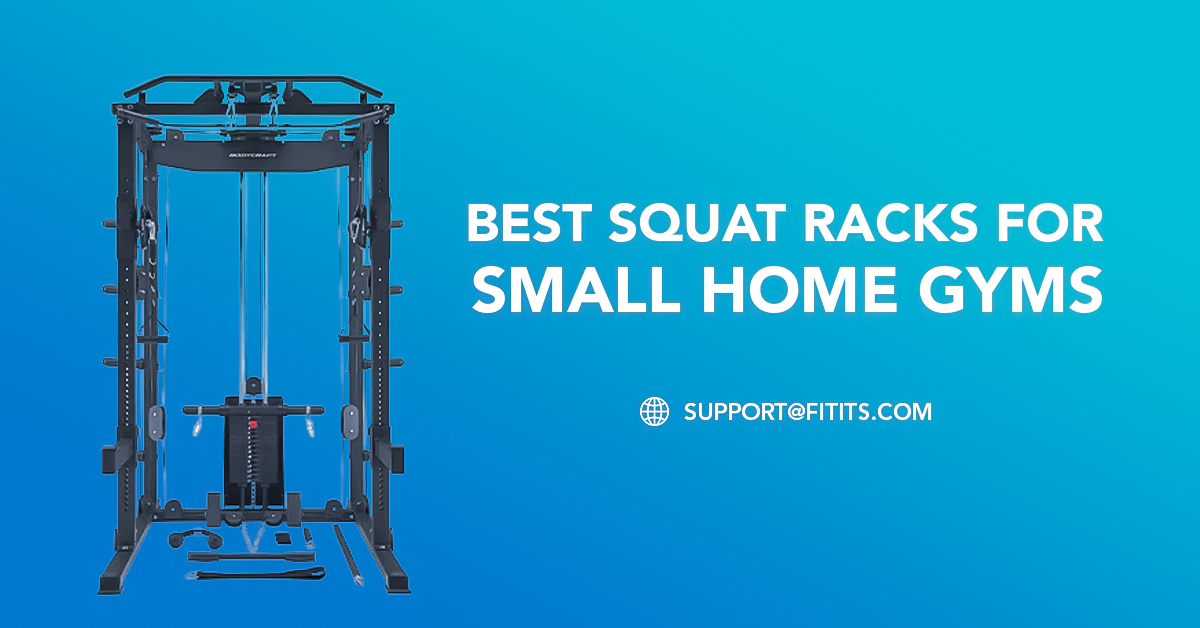
- Power Rack, sometimes called “Full Cage,” is the best choice for safety and adaptability. A power rack is a cage with four posts that you stand in to raise weights. The safety pins or straps and J-cups go from the front uprights to the rear uprights. This design has a safety net that goes all the way around, so it’s the safest way to carry large things by yourself.
Important Things to Look At
- Steel and Building:
- Steel Gauge: This is the thickness of the steel tube. Most of the time, home gym racks are made of 11, 12, or 14-gauge steel. A lower number suggests that the steel is thicker and stronger. 11-gauge is the best quality and is used in businesses.
- The size of the square steel tubes that make up the upright, such as 2″x2″, 2″x3″, or 3″x3″. Uprights that are bigger tend to be stronger and more sturdy. The best standard is 3″x3″ 11-gauge.
- Hardware: Look for strong nuts and bolts, such 5/8″ or 1″ ones. A rack is more sturdy and stiff when it has more hardware.
- Features for safety:
- Spotter Arms/Pins: This is the most important safety element. If you fail a lift, these are the arms or pins that catch the barbell.
- Pin-Pipe Safeties are simple, work well, and are common on cheap racks.
- Strap Safeties: These are nylon straps that are quieter and less rough on the knurling of your barbell.
- Flip-Down Safeties: Strong steel arms that are simple to change and last a long time.
- These are the hooks that hold the barbell on the rack. Find J-cups that are lined with UHMW plastic to keep the knurling and finish on your barbell safe.
- Spacing of holes (Westside Spacing):
- The distance between the adjustment holes on the uprights affects how accurately you can place your J-cups and safeties. Two inches is the standard distance.
- Westside spacing is a region of the rack, usually in the bench press zone, where the holes are just 1 inch apart. This lets you make very little changes to reach the exact height for your bench press, which is a big plus.
- Footprint and Stability:
- Weight Limit: A decent home gym rack should be able to hold at least 700 pounds, and some high-quality ones can hold more than 1,000 pounds.
- “Freestanding” vs. “Bolt-Down”: To keep heavy-duty racks from tipping over, you may need to fasten them to the floor or a lifting platform. But a lot of newer designs are “flat-foot” or have a broad base, so they are solid enough for most people without needing to be bolted down.
- Adding things and making them bigger:
- A superb rack is a modular system that can change as you do. A typical aspect of a squat rack should be a pull-up bar.
- Check to see whether there are accessories available, such as dip stations, landmine posts, lat pulldown systems, and weight plate storage horns. A rack with a lot of different attachments is worth a lot over time.
The Best Squat Racks Reviewed: The Market Leaders
We looked at the most common racks to assist you choose the best one for your needs, space, and price.
1. The REP Fitness PR-1100 Power Rack is the best overall value.
REP Fitness has learned how to make high-quality, feature-rich equipment that is yet affordable. The PR-1100 is the best way to start training seriously.
- The specs say it can hold 1,000 pounds, is made of 12-gauge steel, has 2″ x 2″ uprights, a pull-up bar with several grips, and numbered uprights. Has optional attachments for lat pulldowns and dips.
- The feel: It’s very sturdy and steady considering the price. It seems comfortable and secure for all the big lifts. It comes with everything you need to set up a home gym.
- Why It Wins: The pricing is incredible for a complete power rack that can hold a lot of weight and comes with a lot of attachments. It offers the same level of safety as a full cage, but at a price that is comparable with many half racks.
- Best For: The lifter on a budget who wants a complete power rack that is safe and can be used in many ways without spending a lot of money.
2. The Rogue RML-3 Monster Lite Half Rack is the best heavy-duty champion.
The Rogue Monster Lite half rack is a beast for those who don’t want to give up on construction quality but don’t have a lot of space in their garage.
- The Specs: It’s made of huge 3″x3″ 11-gauge steel, can hold more than 1,000 pounds, has Westside hole spacing in the bench zone, and comes with heavy-duty spotter arms.
- The Feel: A real tank. The 3×3″ uprights and substantial base make it seem as sturdy as a lot of full power racks. The J-cups and safeties are designed for professional use.
- Why It Wins: It has Rogue’s famous “overbuilt” quality in a half-rack configuration that takes up less room. There are almost no limits to how you may connect and modularize it.
- Best For: Serious lifters who don’t have a lot of room and want a high-quality, American-made rack that will endure for many years.
3. The PRx Performance Profile ONE Folding Squat Rack is the best way to save space.
PRx changed the home gym with its wall-mounted foldable rack design, which was featured on “Shark Tank.”
- The Specs: It comes in steel sizes of 2″x3″ or 3″x3″ and can hold more over 1,000 pounds. When folded up against the wall, it just takes up 4 inches of space.
- The Feel: It feels just as strong as a regular four-post rack when it is folded down and secured in place. The folding mechanism, which is helped by gas shocks, is very well designed and simple to operate.
- Why It Wins: It solves the primary obstacle for those who have home gyms: space. It lets you have a full-size, high-capacity squat rack in a garage where you still need to park your vehicle.
- Best For: People who have a garage or basement that they use for more than one thing and require a high-performance rack that can be put away when not in use.
4. The Best Power Rack: REP Fitness PR-5000 V2
This is REP’s response to high-end commercial racks. It has high-end functionality at a price that is hard to beat.
- The Specs: 11-gauge steel in a 3″x3″ size, 1″ hardware, a wide range of color choices, and a large ecology of attachments, such as the Ares and Athena cable systems.
- The Feel: A monster that can handle anything. You can change it in whatever way you want, and it seems like it won’t budge. The sleek surface and laser-cut numerals make it seem and feel high-end.
- Why It Wins: It has the same modularity, robustness, and features as the most costly brands, but it costs a lot less. It’s a “endgame” rack that may be set up to be a full training center.
- Best For: The “prosumer” who wants to construct their ideal gym at home with a customized, high-end power rack as the main element.
How to Get the Most Out of Your Squat Rack
Having one of the top squat racks for your home gym is only the beginning. You may get the most out of it by using it safely and appropriately.
Important Exercises for Your Rack
- The barbell back squat is the best workout of all time. Place the safety arms immediately below the lowest point of your squat.
- The barbell bench press is the best way to strengthen your chest. Do this on your power rack with the safety pins situated slightly above your chest.
- Set the J-cups at shoulder height for the Overhead Press (OHP) so you can easily get the bar into the right position.
- Rack Pulls: This is a kind of deadlift where you pull from a higher position off the safety pins. Great for becoming stronger in your upper back and grip.
- Pull-Ups and Chin-Ups: These are important exercises for improving your back, and most racks include a pull-up bar.
- Inverted Rows: To do this bodyweight rowing motion, set an empty barbell low on the J-cups or safeties and hang from it.
Tips for safety and upkeep
- Always Follow the Rules: This is the most crucial one. Make it a habit to set the spotter arms or pins for every lift. In only ten seconds, you can avoid being hurt badly.
- Check Your Hardware: Every few months, walk around your rack and make sure that all of the nuts and bolts are snug.
- Always utilize J-cups and safety arms with plastic (UHMW) liners to keep your barbell safe. This will keep the knurling on your barbell from becoming ruined.
- Know Your Space: Be mindful of what’s around you. Make sure there is ample space on both sides of the rack, particularly while loading and unloading the barbell.
In conclusion, the heart of your home gym
A squat rack is more than just a piece of metal; it shows how committed you are to getting stronger. The most important thing you can buy for your home gym is this. It will give you the safety, flexibility, and confidence you need to change your body and your life. It lets you do the best strength-building exercises known to man at home, whenever you want.
Buying one of the finest squat racks for your home gym is a good investment that will help you become stronger, healthier, and more independent. You are laying the groundwork for a lifetime of improvement, whether you choose a space-saving folding rack, a strong half rack, or a full-fledged power rack. Stop being afraid as you workout. Buy a rack and start working on becoming the best version of yourself right away.
Are you ready to make the heart of your home gym? You can find full guides to racks, barbells, and plates on Fitits.com. If you want personalized help building your perfect setup, you can also email our team of experts at support@fitits.com.
Questions That Are Often Asked (FAQ)
Q1: What’s the difference between a power rack and a squat rack?
A “squat rack” is a broad term, but it usually means a half rack or squat stand with two vertical posts. A power rack, often called a complete cage, contains four upright supports that form a cage for you to lift in. The main difference is safety. A power rack’s safety pins go across the cage, which makes it safer for unsuccessful lifts. This makes it the safest choice for heavy solo training.
Q2: How much room do I need for a squat rack?
You need to account for three dimensions:
dimension: A standard power rack has a dimension of around 4 ft × 4 ft.
Height: Most racks are between 80″ and 90″ tall. Ensure you have at least a few inches of ceiling clearance, particularly if you want to perform pull-ups.
Working Space: You need enough area on the sides to load a 7-foot Olympic barbell, so a width of at least 10-12 feet is optimal. You also need room in front of or within the rack to conduct your lifts.
Q3: What kinds of workouts can I perform with a squat rack?
A squat rack unlocks all the main barbell compound movements. This comprises squats, bench presses, overhead presses, rack pulls, and inverted rows. Most racks include a squat rack with a pull-up bar, so you can also perform pull-ups, chin-ups, and hanging leg lifts.
Q4: Should I attach my rack to the floor?
Your lifting style and the rack will determine this. Many high-duty racks are more sturdy when fastened down, particularly if you intend on employing accessories that cause lateral stresses (like a dip station) or are lifting very heavy. However, many current flat-foot designs from respectable companies are fairly stable for the ordinary user without being bolted down.
Q5: What is “Westside” hole spacing, and do I need it?
Westside spacing refers to 1-inch hole spacing across the bench press portion of a rack’s uprights, as opposed to the normal 2-inch spacing. This lets you position the safety pins and J-cups at a more exact height for benching. While not absolutely required, it’s a huge quality-of-life function that helps you attain a flawless, safe lift-off.
Q6: What is a decent budget for a nice home gym squat rack?
You may acquire a highly solid and safe home gym squat stand or a budget-friendly power rack (like the REP PR-1100) for $300-$500. Most mid-range, stronger half racks and power racks cost between $500 and $900. High-end racks from manufacturers like Rogue or high-end REP models may cost $900 or more.