

The house of today is a paradox. We want it to be a place where people can relax and be productive, a safe haven and a place to change. For a lot of people, this includes the dream of having a gym at home. But reality often hits hard: a spare bedroom that is really just a big closet, a living room corner that is already taken by a desk or a basement with ceilings that are low enough to make a giant feel small. The idea of a huge gym with racks, benches, and machines quickly fades away.
But what if the answer wasn’t to find more space, but to use the space you already have better? What if one machine could take the place of all the equipment in a room? The small, all-in-one workout station promises this. These amazing pieces of engineering are made to fit in with the limitations of modern life. They give you a full-body workout without taking up a lot of space. If you’ve ever looked at your flat and thought, “There’s just no room,” they are the answer.
This guide is all about finding the best full-body home gym machines for small spaces. We’ll cut through the marketing jargon, look at how the machines work, and help you find one that can turn your small space into a launchpad for your fitness goals.
The Corner Gym: Maya Got Her Fitness Back
Maya, a 38-year-old architect who lived in a flat in the city, loved to work out but didn’t have a home. The gym she went to was 20 minutes away by car, which added 40 minutes to her already busy schedule. She had tried the “bits and pieces” method, which included a yoga mat here and a kettlebell there, but it didn’t work for her because it was too random and boring. She wanted the structure of a real gym, where she could move from one exercise to another on a solid piece of equipment.
It seemed like her cozy 700-square-foot flat was laughing at the idea. Where would a gym fit? In between the couch and the TV? Next to the table where you eat? She looked around online, and her mouse hovered over huge cable-and-pulley systems that looked like they belonged on the International Space Station. She was about to close the browser when she saw an ad that said, “Your Gym in a 4×4 Footprint.”
It was a small vertical trainer. It promised more than 50 exercises, like lat pulldowns, chest presses, leg curls and cable crossovers, all from a machine that looked like a sleek, high-tech closet. The price was an investment, but it was less than two years’ worth of unused gym membership. She took the measurements of the corner of her bedroom. It would be a tight fit, but it was doable. She made the jump.
The machine was set up two weeks later. That corner, which used to be home to a lonely laundry basket, became her command center. She would do a quick 30-minute circuit before going to work. She would try out new exercises on the weekends. The machine gave her body the resistance and variety it needed. Maya was in the best shape of her life in just one year, thanks to a machine that respected her space and her drive. Her story is a strong proof that you don’t need a lot of room to set big fitness goals.
The Parts of a Space-Saving Powerhouse
Not every “all-in-one” machine is good for small spaces. Some are huge machines with arms that reach far. When looking for the best full-body home gym machines for small spaces, you should focus on a certain set of features.
1. Vertical Orientation
To save space, you should build up instead of out. The best small machines are tall and narrow. They use vertical space for exercises like lat pulldowns and overhead presses, which keeps the floor space they take up to a minimum.
2. One Position, Many Functions
You shouldn’t have to change the settings on the whole machine to go from a chest press to a leg extension. Great small gyms have adjustable pulleys, attachments that can be changed quickly, and arms that can be turned to make it easy to switch between exercises.
3. Resistance that works together
The machine’s frame should have the resistance source (weights, bands, or digital systems) built right into it. A machine that needs you to load free-standing weight plates takes up twice as much space. Look for systems that use their own proprietary weight packs, digital resistance engines, or integrated weight stacks.
4. Parts that can be folded or pulled back
Some of the most creative designs have benches that fold up, arms that pull back, or platforms that slide away. This lets the machine have a “workout mode” and a “storage mode,” which is much smaller. This is a big deal for rooms that can be used for more than one thing.
The Best Full Body Home Gym Machines for Small Spaces (Amazon and More)
We grouped our top picks by the type of resistance they use and how much space they take up. There is something for every budget and flat size.
1. The Digital Dynamo: Smart and Very Small
Best for: People who know a lot about technology and want guided workouts, automatic resistance changes, and the smallest possible footprint.
This group is at the forefront of the home fitness revolution. These machines use motors or electromagnets to create resistance, so you don’t need any weights. They are very quiet, which makes them great for living in a flat.
Tonal (and its Amazon Alternatives) is the best choice.
Tonal is the best and is sold directly, but its popularity has led to a lot of cheaper “smart gym” competitors on Amazon. Try searching for terms like “digital resistance home gym” or “smart cable machine.”
- How it works: There are two adjustable arms that come out from a screen that is mounted on a wall. A digital motor makes it easy to move things up to 100–200 pounds. The screen shows follow-along workouts, and the machine can change the weight for you.
- Footprint: Almost none. It goes right on your wall. It’s just as annoying as a big TV when the arms are pulled back.
- Why it Wins for Small Spaces: It makes the most of every inch of space. It takes the place of a dumbbell rack, a barbell, a cable machine, and a personal trainer, and it doesn’t take up any floor space.
- The Investment: This is the top tier, with prices starting at $2,000 and going up. But the fact that there is no monthly gym fee can make up for this over time.
2. The Cable King: A classic look in a small package
Best For: People who like how a traditional gym’s cable machine feels and want a workout that works for a long time.
These machines have a weight stack and a set of pulleys and cables that keep the tension steady during the workout.
Best Choice: Bowflex PR3000 Home Gym
For good reason, the Bowflex name is known for home gyms. Some of their models are big, but the PR3000 is a masterclass in how to make things small.
- How it works: Instead of a heavy weight stack, it uses special “Power Rods.” These flexible rods can give you resistance from 5 lbs to 210 lbs (upgradable to 310 lbs). This makes the machine a lot lighter and easier to move than a gym with stacks.
- Footprint: About 6.5 feet by 5.3 feet when in use, but its vertical shape makes it feel smaller.
- Why it works well in small spaces: the cable pulley system doesn’t need to be changed. You can switch from a chest press to a lat pulldown to a leg curl without having to re-rig a cable. This saves time and makes you less angry. It is also quieter than regular gyms because there is no clanking weight stack. If you like a classic look, this is one of the best full-body home gym machines for small spaces.
- The Marcy MWM-988 150lb Stack Home Gym is a cheap alternative to Amazon.
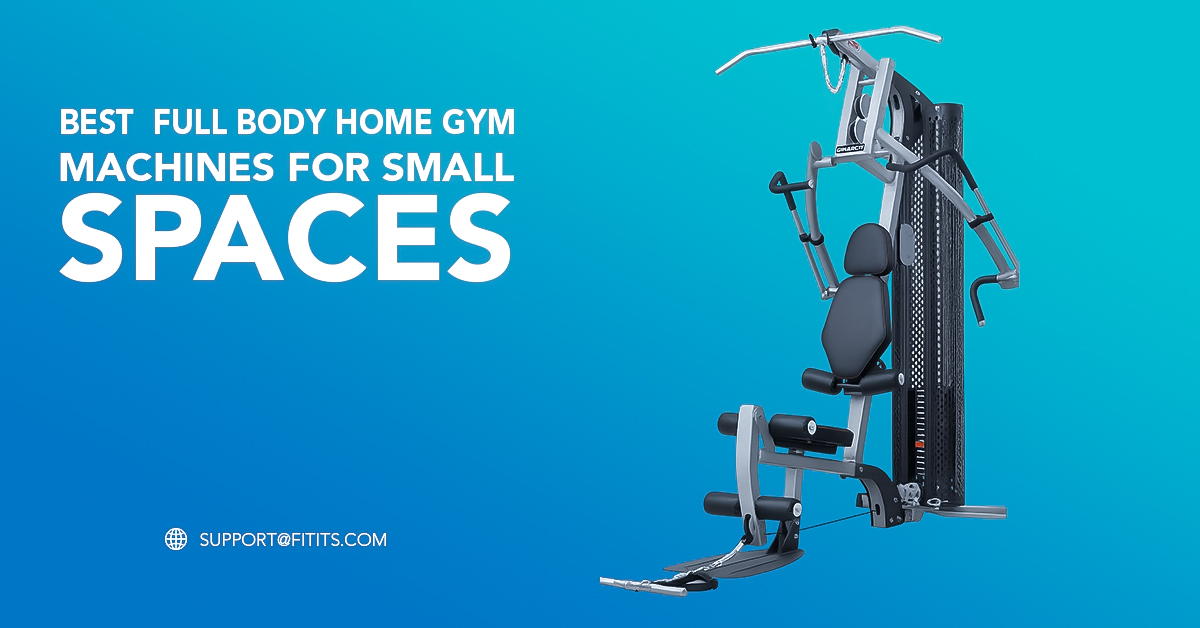
- The Marcy MWM-988 is a great way to get started with stack-based gyms. It has a smaller footprint than most of its competitors and comes with a lot of different exercises, like a chest press, lat pulldown, and leg developer, all powered by a 150-pound vinyl-coated weight stack.
3. The Minimalist Master: The Bodyweight Guru
Best For: People who like calisthenics and want a workout that focuses on their core and doesn’t need a lot of equipment.
The best machine is sometimes the one that helps you learn how to control your own body. Power towers are simple, vertical frames that can be used for a lot of basic exercises.
Best Choice: SportsRoyals Power Tower Dip Station
This power tower gets high ratings on Amazon all the time because it is stable and comfortable to use.
- How it works: It’s just a frame with a lot of places to hold on to. It has a pull-up bar for your back and biceps, dip handles for your chest and triceps, push-up handles and a padded backrest for vertical knee raises for your abs.
- Size: About 3.5 feet by 2.5 feet. It uses space very well.
- Why it works for small spaces: It works your whole upper body and core with just your body weight. You can make pull-ups harder by adding resistance bands or a weighted vest. It works really well for building functional strength, and there are no moving parts to worry about. This is an important thing to think about when choosing the best full-body home gym machines for small spaces.
4. The Fold-Away Phenom: Work Out and Then Put It Away
Best For: People who live in studio apartments or spaces that can be used for more than one thing and need the gym to disappear completely after use.
This is when engineering really gets smart. These machines work like their bigger cousins, but they have smart ways to fold up.
Best Choice: Total Gym XLS
The Total Gym has been a home fitness legend for decades, thanks to Chuck Norris. It uses an inclined glideboard and your own body weight to make it harder.
- How it Works: You lie or sit on a glideboard that is tilted. The more you lift, the higher the incline you set. You can do more than 80 exercises with different attachments.
- Footprint: When it’s in use, it’s about 7.5 feet long, but its narrow shape lets it fit in tight spaces like hallways.
- Why it works well in small spaces: It folds up in seconds to about the size of an ironing board and can be put under a bed or in a closet. It gives you a full-body workout with little impact, which is great for building lean muscle and flexibility without hurting your joints.
How to Pick the Best Machine for Your Needs and Space
You can see the choices, but how do you choose the one that’s best for you? Think about these three important questions.
1. What is the “real” footprint of mine? (The Test with the Tape Measure)
Don’t just look at the size of the product. They usually only list the base of the machine. You need to think about “operational space.”
How far do the arms or handles of cable machines reach? You need space on the sides.
- For Glideboards: How much room do you need at the top and bottom of the board?
- Action Step: Use painter’s tape to outline the size of the machine and the extra space you’ll need to do important exercises like the chest press or leg extension. Leave the tape on the floor for a day. Does it feel too small?
2. What is my “resistance style”?
The way a machine makes resistance has a big impact on how the workout feels.
- Digital/Magnetic: Very quiet and smooth. Great for exercises that require controlled movements and physical therapy.
- Power Rods (Bowflex): Resistance that gets stronger over time. As you push or pull through the range of motion, it gets harder. Good for explosive movements, but it feels different from free weights.
- Weight Stack: Classic resistance that goes in a straight line. The weight stays the same from the start to the end of the rep. This is how most people are used to feeling in a commercial gym.
- Bodyweight/Glideboard: Naturally different. It works your stabilizer muscles and core in a way that machines with fixed paths can’t.
3. What is my long-term goal?
Goal: Build Maximum Muscle (Hypertrophy): You will need a machine that can handle a lot of weight (at least 200 lbs) and has a linear feel. The best type of machine for this is a weight stack machine like the Marcy MWM-988 or a digital system with high resistance.
If you want to improve your functional strength and mobility, a Power Tower or a Total Gym will work better. They focus on compound, multi-joint movements that build strength in the real world.
Goal: Consistency and guided workouts. A smart digital machine like a Tonal or one of its competitors is the best. The follow-along classes take the guesswork out of it and keep you going.
Keeping Your Compact Gym Running Smoothly
One good thing about the best full-body home gym machines for small spaces is that they usually don’t need as much upkeep as commercial equipment. But taking care of things goes a long way.
- Once a week, after each use, wipe down all of the upholstery and handles with a mild cleaner to keep sweat from breaking down the material.
- Once a month, check all of the cables, pulleys and bolts. Check for any fraying on cable machines. If you have a frame-based machine, make sure to tighten any bolts that may have come loose over time.
- Every six months, put a thin layer of silicone lubricant on machines with guide rods for the weight stack to make sure they move smoothly. Look in your owner’s manual to see what kind of lubricant is best for your vehicle.
Conclusion: Make the most of your space and your potential.
You no longer need a separate room to get a life-changing workout. Fitness engineering has come a long way, and now you can fit the power and flexibility of a commercial gym into a small space in your life. A full-body machine is an investment in more than just equipment; it’s also an investment in getting rid of excuses. It gets rid of the commute, the crowds, and the monthly fees. It’s always open, always there for you, and made just for you.
You can make a neglected corner your own health sanctuary, just like Maya did. Figure out how much space you have, what you want to achieve, and which machine will help you get there. The best full-body home gym machines for small spaces don’t just save space; they also help you get stronger and healthier.
Are you ready to move on? Check out our detailed reviews and comparison guides on Fitits.com, or send an email to support@fitits.com to get a personalized recommendation based on your needs and goals.
Questions that people ask a lot (FAQ)
Q1: Which compact home gym machine is the best?
What is “best” is different for everyone and depends on what you want to do and how much money you have. The Bowflex PR3000 is often one of the best options because its Power Rod system is lighter and more compact than a traditional weight stack. This makes it very versatile and saves space. A wall-mounted digital system like Tonal or a simple Power Tower is the best choice if you want the smallest footprint.
Q2: Do full-body machines work for building strength?
Yes, they work very well. Many people think that free weights are the best way to work out stabilizer muscles, but modern full-body machines offer consistent tension, safety, and a wide range of movements that are hard to do at home (like lat pulldowns). These machines give the average person who wants to build muscle, tone up, and get stronger more than enough resistance and features.
Q3: How much room do I really need for a small home gym machine?
In general, plan for a space that is at least 4 feet by 6 feet. This gives you enough room for the machine and enough space to work out without hitting a wall. Before you buy, always do the “tape measure test” on your floor.
Q4: Will these machines give me a good cardio workout?
You can get a cardio workout by doing exercises in a circuit with little rest, even though they are mostly meant for strength training. Moving quickly from chest presses to leg extensions to rows will make your heart rate go up a lot. But they can’t take the place of cardio machines like a bike or rower.
Q5: Is it better to buy a machine than just dumbbells and a bench?
It all depends on what you like. Dumbbells and a bench give you more freedom of movement and are better for building stability. But a machine is safer (you can’t drop a weight on yourself), it guides your movement (which is great for beginners learning form), and it lets you do pulling exercises (lat pulldowns) that are hard to do with dumbbells. In small spaces, a single all-in-one machine is often better than a full dumbbell rack and a bench because it takes up less space.
Q6: How much money should I set aside for a good small machine?
A good Power Tower costs between $150 and $250. The Marcy MWM-988 is an entry-level cable/stack machine that usually costs between $400 and $600. The Bowflex PR3000 and the Total Gym XLS are two examples of proven systems that cost between $800 and $1,500. The price of high-end smart digital gyms starts at about $2,000 and goes up. It’s a big investment, but it will save you money on gym fees.