

The dumbbell is the most important piece of equipment for strength training. It is the basic tool, the building block of resistance that has helped people build strong bodies for more than a hundred years. Choosing your dumbbells is one of the most important things you will do when setting up a home gym. It looks like a simple choice, but it has a big effect on the safety, usefulness, and overall vibe of your training environment. The main argument comes down to a simple point of geometry: do you want flat sides or perfect circles?
The debate about which is better for home gyms: hex or round dumbbells? is more than an aesthetic preference. It’s a practical factor that influences everything from the workouts you can perform to the safety of your floor and the organizing of your room. Do you prefer for the rolling predictability of the standard round dumbbell, a fixture of commercial gyms worldwide? Or do you select the angular stability of the hex dumbbell, a favorite among functional training and garage gym enthusiasts?
This guide will be your best source of information in this argument. We will look at the design, function, and feel of each model in depth so that you can choose the finest one for your home gym.
The Shape of Strength: How a Simple Choice Set up a workout
Ben, who is 40 years old and works as a software engineer, was finally creating the gym of his dreams in his basement. He had put down the rubber floor and set up a power rack. A full set of dumbbells was the last piece of the puzzle. He was ready to buy when he got online, but he quickly ran into the typical problem: hex or round?
He thought of the commercial gym he used to go to, which had long, immaculate rows of lovely, spherical dumbbells with chrome handles. They seemed like the “real deal,” like professionals. He thought of them as a place where people lifted heavy things. On the other hand, he had seen a lot of movies of home and garage gyms with rubber hex dumbbells in them. They looked tough and useful.
He developed a list of pros and cons. The round dumbbells looked nice and felt balanced, but the floor of his basement was a little sloping. He imagined a 70-pound dumbbell slowly sliding away, a silent, dangerous menace to his foot or his drywall. The hex dumbbells didn’t roll, which was a big plus for safety. They were also usually cheaper. But he was apprehensive that they might not feel as comfortable or balanced for some workouts.
Ben thought about it for a week and decided that safety and pragmatism were more important than nostalgia. He got a full set of hex dumbbells with rubber on them. He knew he had made the proper choice the first time he used them. He did a series of dumbbell push-ups, putting his hands on the stable, flat parts of the weights. This would have been difficult with circular dumbbells. He could put the weights down between sets without thinking twice, knowing they would stay there.
The hex shape didn’t simply prevent rolling; it opened up new exercise possibilities and gave a level of stability that made his solo home workouts feel safer and more comfortable. Ben’s example underscores a vital truth: the seemingly slight design difference between hex and round dumbbells may profoundly impact your entire training experience.
What a dumbbell is made of: A Comparison of Heads
To choose the best dumbbells for your home gym, you need to know the difference between hex and round dumbbells. We need to look at the main differences feature by feature in order to have a real debate.
1. The Shape and Stability Factor
This is the most clear and important distinction.
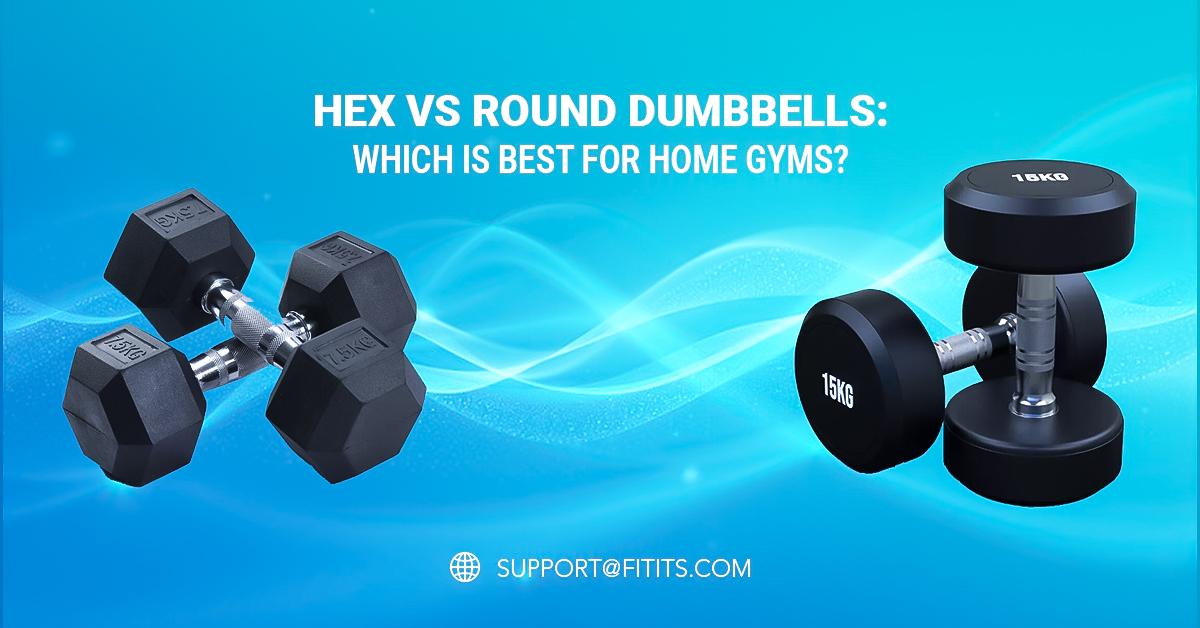
- Hex Dumbbells: As the name suggests, their heads are hexagonal, or six-sided. The flat edges make them very stable. A hex dumbbell stays where you put it when you set it on the floor.
- Dumbbells in a circle: These have a round weight head that is classic. They are sturdy on a completely flat surface. But they will roll if they are on a slope, which is typical in garages and basements, or if they are pushed by accident.
- The Final Decision: Hex dumbbells provide a clear and big benefit in stability for home gyms, where floors are sometimes not precisely level and safety is up to the user. The “no-roll” feature is probably the most crucial reason why they are the most popular home gym equipment.
2. Different types of exercise
The shape of the dumbbell head has a direct effect on the exercises you can do.
- Hex Dumbbells: The flat sides make them stable, which makes them the best choice for exercises on the floor. This includes:
- Push-Ups with Dumbbells: When you put your hands on the dumbbells, you can move them more freely and hold them in a neutral position, which is gentler on your wrists.
- Renegade Rows: You can do rows one arm at a time while in a plank posture with your hands on the dumbbells. This is a very hard exercise for your core and back.
- Man-Makers and Devil Presses: These complicated, full-body moves that are popular in functional exercise need the stability that hex dumbbells can give them.
- Round dumbbells are mainly used for classic lifting exercises where the dumbbell is held all the time, including presses, curls, rows, lunges, and so on. They don’t make floor-based movements any more flexible.
The Verdict: Hex dumbbells are objectively more versatile because they let you do a whole group of functional, complex exercises that you can’t do or shouldn’t do with round dumbbells.
3. Materials, how long they last, and how they look
At this point, the lines start to blur, and personal choice becomes more important.
- Hex Dumbbells: The rubber-coated hex dumbbell is the most frequent type. The heads are made of cast iron and have a thick covering of rubber on them.
- Pros: The rubber keeps the dumbbell, your floor, and other equipment from becoming damaged. It also makes a big difference in how much noise there is.
- The rubber can smell bad at first, and lower-quality rubber can split or peel with time.
- Round Dumbbells: There are several types of materials that these come in.
- Pro-Style Round Dumbbells: These are the standard weights used in commercial gyms. They have chrome handles and iron plates that are bolted together. They seem professional and are quite strong, however they don’t protect the floor.
- Urethane Round Dumbbells: This is the best choice. The heads are covered in high-quality urethane, which lasts longer, doesn’t smell, and can be personalized with logos. They also cost a lot more.
- Iron Round dumbbells are made of simple, old-fashioned cast iron. They are almost impossible to break, but they are loud and can easily hurt floors and other equipment.
The Conclusion: Rubber-coated hex dumbbells are the greatest choice for a regular home gym because they are strong, safe, and quiet. If money is not an issue and you don’t need to do exercises on the floor, urethane circular dumbbells are a more stylish and higher-end option.
4. How it feels and how comfortable it is
The way the dumbbell is shaped might affect how you lift it.
- Hex Dumbbells: The handles on hex dumbbells are usually made to accommodate the hand in a “ergonomic” way. Some lifters like this, but others like a handle that is straight. The knurling, which is the pattern on the grip that makes it rough, is usually not too aggressive.
- Round Dumbbells: Round dumbbells that look like pro-style ones or are made of urethane frequently have straight chrome grips that are fully knurled. A lot of serious lifters like this feel because it’s similar to how they hold a barbell. For most people, the difference in balance between a high-quality round dumbbell and a hex dumbbell is extremely small.
The conclusion: This is really personal. If you’re used to how a commercial gym feels, you might like the straight, fully knurled handle on a round dumbbell better. You will probably enjoy a hex handle better if you want a pleasant, shaped grip.
5. Cost: For most people who build their own home gym, the cost is a big deal.
- Hex Dumbbells: Rubber-coated hex dumbbells are usually the cheapest way to get an entire set. Because they are so popular and created in such large quantities, they are quite cheap.
- Round dumbbells: The price depends a much on the material. Iron plates from the past are cheap, but pro-style and especially urethane-coated round dumbbells cost a lot more than hex dumbbells.
The Bottom Line: Hex dumbbells are the finest value for money for anyone who wants to establish a home gym on a budget.
The Ultimate Guide: When to Pick Hex or Round
Which is better for home gyms: hex or round dumbbells? Ultimately, it all boils down to what you value most. Let’s make some clear examples to help you make your choice.
If you want to use hex dumbbells, you should
- Your number one priority is safety: You work out by yourself, have kids or pets, or your floor isn’t completely flat. In these instances, the no-roll design is a must-have safety feature.
- You do HIIT or functional fitness: Dumbbell push-ups, renegade rows, burpees over the dumbbell, and Devil presses are some of the exercises you do in your training. You need the solid base that only a hex form can give you.
- You Have a Budget: You want to get a full set of weights without spending a lot of money. The best price-per-pound bargain is for rubber hex dumbbells.
- You care about your floors and your peace and quiet: Most hex dumbbells have a rubber coating that preserves your floors and makes a lot less noise than iron weights.
If you want to, you can choose round dumbbells.
- You are copying a high-end commercial gym: You have a lot of money to spend and want the professional look and feel of pro-style dumbbells with a urethane coating.
- Your workouts are very traditional: You just do conventional lifting moves like presses, curls, and rows, and you don’t care about doing complex exercises on the floor.
- Your floor is completely flat and covered in mats: You have put down thick, high-quality rubber flooring all across your gym, which lowers the chance of rolling weights.
- You are a purist who likes a straight handle: You care most about how the handle feels, and you really like a straight, totally knurled chrome handle over a curved one.
A Note About Dumbbells That Can Be Changed
Many people who have home gyms don’t even have to think about the hex vs. round dumbbells argument because they use adjustable dumbbells. These systems, like as the PowerBlock, are rectangular, which makes them just as stable as hex dumbbells but takes up a lot less room. If the size of the set is your main concern, you could think about getting an adjustable one.
How to Set Up Your Dumbbell Station
No matter what you choose, efficient storage is the key to a secure and tidy home gym.
- Horizontal Racks: A 2- or 3-tier dumbbell rack is the best way to store all of your weights. These racks will include cradles or lips to keep spherical dumbbells from rolling off.
- A-Frame Vertical Racks: For smaller sets of dumbbells (usually 5–6 pairs), these are wonderful space-savers. People utilize them more often with hex dumbbells.
- Placement: Put your rack against a wall where it won’t get in the way of people working out, but it will still be easy to get to.
Conclusion: The best option for a modern home gym
Even while a shiny rack of professional-style spherical dumbbells is quite appealing, the evidence clearly goes in one direction for most people who work out at home. When it comes to hex vs. round dumbbells, the hex dumbbell is the clear winner for home gyms.
Its natural steadiness adds an important element of protection to a home situation when no one is watching. Its form opens up more functional activities, which makes your workouts more interesting and useful. Its rubber-coated construction keeps your floors, your investment, and your peace of mind safe, all while giving you the most value for your money.
Round dumbbells will always be useful in high-end, well-kept gyms. But a modern home gym is a place that is secure, useful, and flexible. The hex dumbbell is not just a fantastic choice for the garage fighter, the basement builder, and the spare-room lifter; it’s also the smartest decision. It is the shape of strength, but it has been changed to fit your life.
Are you ready to put together your dumbbell set, or do you have further questions? Visit Fitits.com to read our in-depth product reviews and recommendations on how to set up a home gym. You can also email our team at support@fitits.com for individualized help.
Questions That Are Often Asked (FAQ)
Q1: Are hex dumbbells definitely better than circular dumbbells?
Yes, in most practical ways, for home gyms. Their stability keeps them from rolling, which is a big safety benefit on floors that aren’t perfect. Their form lets you do more kinds of workout, such push-ups with dumbbells. They also usually cost less. Some purists may like the “feel” of round dumbbells, but hex dumbbells are better for most home setups since they work better.
Q2: What kind of dumbbell is safer to use at home?
Hex dumbbells are definitely safer to use at home. Because they have flat sides, they won’t roll away, which lowers the chance that they may roll into walls, furniture, or your feet. When you work out alone without a spotter, this stability is quite important.
Q3: How do I know what weight dumbbell to start with?
This depends on how fit you are right now. For novices, a smart way to choose a weight is to choose one that lets you do 10 to 15 reps of an exercise with good form, with the last 2 to 3 reps being hard. A beginner set for ladies could have pairs of 5, 10, 15, and 20 pounds. A beginner set for males could have pairs of 15, 25, 35, and 45 pounds. Adjustable dumbbells are a great choice because they can be used for a lot of different things right away.
Q4: Do hex and round dumbbells work differently?
There is no change in performance for 99% of typical lifting exercises, such presses, curls, rows, and so on. A 50-pound weight is a 50-pound weight, no matter what shape it is in. The difference in performance only shows up in workouts that need a sturdy basis on the floor, where hex dumbbells let you do new things.
Q5: If hex dumbbells are preferable, why do so many commercial gyms have round dumbbells?
Commercial gyms include properly placed, precisely level floors and dumbbell racks with cradles that keep the weights from rolling around. They frequently put the high-end look and feel of pro-style or urethane round dumbbells first. In addition, typical “bodybuilding” type gyms don’t have as many utilitarian floor workouts as hex dumbbells make possible.