
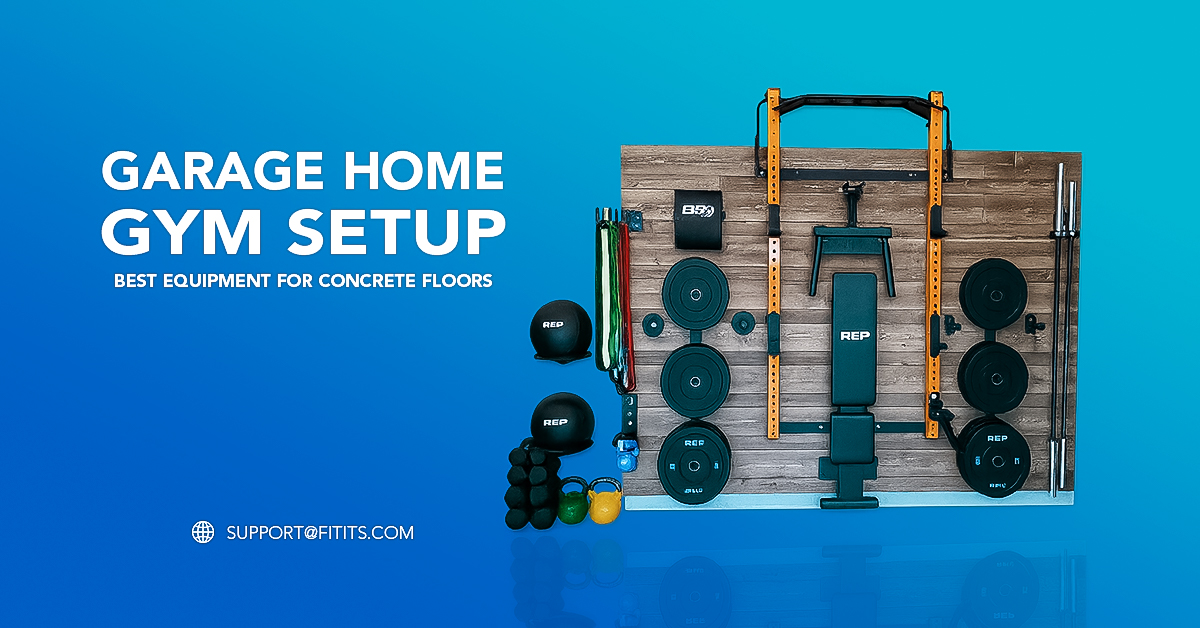

The garage is the unsung hero of the modern house. For most people, it’s a liminal place where cars, holiday decorations, and forgotten tasks are all piled up. But for more and more people who are into fitness, it means more than that: potential. The garage is the best place to build the ultimate home gym since it has high ceilings, is built to last, and is separate from the main living space.
But the concrete floor is a unique and tough task in this tough environment. Concrete may be hard, loud, and harsh. It can hurt your joints, your pricey tools, and your connection with your family or neighbors. Putting a squat rack on bare concrete will break the floors, damage the barbells, and make the space feel more like a construction site than a place to get well.
This tutorial will show you all you need to know to set up a successful garage home gym: The best tools for concrete floors. We won’t simply list equipment; we’ll also talk about how to create a gym from the ground up that is safe, useful, and works well. We’ll talk about the best flooring options, the best equipment selections, and the best ways to set up your garage so that it becomes a great place to train.
Mark’s Garage Gym Story: From Cracked Concrete to a Concrete Plan
Mark, a 42-year-old dad and weekend warrior, had the classic ambition of having a gym in his garage. He was sick of his busy commercial gym and wanted a place where he could lift heavy things, listen to his own music, and show his kids how to do it. He bought a good barbell and a set of iron plates, moved the lawnmower out of the way, and did his first set of deadlifts right on the concrete. The crash and reverberation shook the home and left a small chip in the floor.
His wife was not happy. The loudness was too much for her, and she was worried about the foundation. Mark’s own joints hurt after just one workout. The raw concrete hurt his knees during warm-ups and his back during workouts. He was discouraged because he realized that his excitement had gotten ahead of his planning. His dream gym was frigid, loud, and scary.
Mark went back to the drawing board because he wouldn’t give up. He started from the ground up this time. He looked into several types of flooring for a garage gym and bought thick rubber stall mats to make a place to exercise weights. He found out that some tools worked better on hard surfaces than others. He traded in his loud iron plates for quieter bumper plates that are good for floors. He picked a power rack with a wide, solid base that was made for uneven ground.
He took his time and developed a place that worked with the garage instead of against it. The rubber floor dampened sound and impact, which made his joints feel better and kept his gear safe. His garage wasn’t just a place to store the car anymore; it was a facility constructed specifically to help him get stronger and more resilient. Mark’s experience teaches us an important lesson: a great garage gym isn’t just about the equipment you buy; it’s also about how you build the floor it sits on.
The First Step: Important Flooring Solutions for Concrete
You need to take care of the floor before you even consider about getting a power rack. This is the most critical thing you can get for your Garage Home Gym Setup: The best tools for concrete floors. Four main benefits of proper flooring are:
- Joint Protection: It absorbs shock, which keeps your knees, back, and ankles safe.
- Equipment Protection: It keeps your kettlebells, dumbbells, and barbells from breaking.
- It protects your concrete floors from cracking, chipping, and discoloration.
- Noise Reduction: It makes the sound of dropped weights and movement much quieter.
- Here are the best flooring options, from cheap to high-end.
Good: Horse Stall Mats
This is the best option for heavy-duty garage gyms that don’t cost a lot. These rubber mats are thick (generally 3/4 inch), hefty, and very strong. They are normally available in sheets that are 4×6 feet at farm and tractor supply stores.
- Pros: extremely strong, great at absorbing sound and impact, and extremely cheap. They can take a lot of abuse.
- Cons: They are hard to move because they are so hefty. They often smell like rubber, which can take weeks or even months to go away. You need a sharp utility knife and a lot of work to cut them to size.
Better: Rubber Gym Tiles That Fit Together
These are made particularly for usage in gyms. They are available in several thicknesses, ranging from 8mm to 1 inch, and have edges that fit together like puzzle pieces for a smooth effect.
- Pros: They are easier to cut and put together than stall mats. They usually smell less and come in a range of colors and finishes. The way they fit together keeps them from moving around during workouts.
- Cons: They cost a lot more than stall mats. Tiles that are less than 1/2 inch thick could not be strong enough to protect against particularly hard deadlifts.
Best: A Lifting Platform Just for You
A DIY or pre-built lifting platform is the best choice for serious lifters. A central wooden platform (for solid footing) is usually surrounded by thick rubber matting.
- Pros: It gives your feet the right amount of stability and your weights the right amount of stress absorption. It clearly marks out your lifting area and gives the best protection for your floor and equipment.
- Cons: It takes the greatest area, money, and work to set up. It is a fixed part that is hard to move.
The Workhorse: Choosing Strength Equipment for Concrete Floors
Now that your flooring is in place, it’s time to choose the most important part of your gym. In a garage, the greatest tools are strong, solid, and easy to use.
Power Rack or Squat Stand: What’s the Centerpiece?
This will be the most important part of your gym because it will let you do squats, bench presses, overhead presses, and pull-ups securely.
- Cage (Power Rack): This is a four-post structure that you may stand inside of. Because of its pin-pipe or strap safeties that will capture a failed lift, it is the safest option. This is the best choice for a garage gym when you can be working out by yourself. Find a rack with a wide, flat base so it won’t tip over on a garage floor that isn’t perfectly level.
- A squat stand, also called a half rack, is a two-post structure that doesn’t take up as much room as a complete rack. Some people like that it’s more open, but it’s not as safe. If you get a squat stand, make sure it has strong, adjustable spotter arms.
- Important Feature for Garages: Find racks that have a “flat-foot” or “skid” shape. You don’t have to fasten these to the floor, which is great if you don’t want to drill into your concrete base.
The Plates and Barbell
This is where the idea of a Garage Home Gym Setup: Best Equipment for Concrete Floors truly comes into play. The kind of plates you pick will have a big effect on how loud they are and how long they last.
- The Barbell: You need a good Olympic barbell. Find a bar that can do a lot of different things and is well-balanced between being stiff (for powerlifting) and having a lot of whip (for Olympic lifts). A bar with a cerakote or stainless steel finish will last longer in a garage than one with bare steel or black oxide.
- The Plates: Bumper plates are quite important. Bumper plates are made of solid rubber, unlike old-fashioned iron plates. They are made so that they can be dropped without hurting the bar, the floor, or themselves. You have to buy them if you want a garage gym. When you drop a barbell with bumper plates on a rubber mat, it makes a dull thud. When you drop iron plates, it makes a loud, floor-cracking smash.
Kettlebells and dumbbells
These are the main tools you need for metabolic conditioning and supplementary work.
- Dumbbells that can be adjusted: These are great for saving space, but be careful if your garage is dusty. Dust and dirt can get stuck in the complicated parts of some dial-based dumbbells. If you choose this option, seek for a design that is strong and easy to use, like pin-and-lock or spin-lock types. You might also want to keep them covered while you’re not using them.
- Rubber hex dumbbells are a must-have for every garage gym. The hex shape keeps them from rolling away, and the rubber coating protects both the dumbbell and your floor.
- Kettlebells: A cast iron or steel kettlebell is almost impossible to break, so it’s excellent for a tough garage. Because they are so simple, there are no moving parts that can break.
Cardio That Can Handle the Heat and the Cold
There is no climate control in your garage. In the winter, it will be chilly, and in the summer, it will be sweltering. You need cardio machines that are easy to use and can handle changes in temperature. In these conditions, complicated electronics and delicate motors can stop working.
The Best Tier: Air Bike or Rower:
- Air Bike (like the Rogue Echo Bike or the AssaultBike): These are made like tanks. They use a fan to provide resistance, which is a system with very few fragile elements. They are a favorite in CrossFit boxes and garage gyms around the world because they are so durable and provide you a tough full-body workout.
- Rowing machine (like the Concept2 RowErg): The Concept2 rower is known for being very reliable and is the benchmark for the industry. It can be stored upright to save space, and it gives you a great full-body aerobic workout with little impact. The flywheel and chain system are basic and will last for decades.
The Sled: A Budget-Friendly Bruiser
A exercise sled is one of the best conditioning items you can have that will fit in your garage.
- How it works: You put weight plates on the sled and either pull it or push it with straps. Pushing and dragging a sled are great ways to increase leg strength, explosive power, and cardiovascular endurance.
- Why it’s ideal for garages: It’s easy to use (simply a piece of steel), doesn’t take up much room, and is rather quiet on a smooth concrete or asphalt driveway.
The No-Tech Powerhouse: Heavy Ropes and Jumping Ropes
- Battle Ropes: A thick combat rope tied to the base of your power rack gives you a tough exercise for your upper body and core. It’s easy to use, works well, and stores easily.
- Jump rope is the best cheap, high-intensity cardio gear. It doesn’t need energy and doesn’t take up much space.
Comfort, Healing, and Usefulness
These are the people who help make your garage gym a better environment to work out and have fun.
- A strong, adjustable bench: Find a bench that can hold a lot of weight and has a wide, stable base.
- Foam Roller and Massage Tools: Recovery is really important. These basic instruments are necessary for getting rid of knots and moving better.
- A Big Fan and a Good Heater: You have to have climate control. A big industrial fan can help you get through summer workouts, while a portable space heater will help you get through winter workouts.
- Good Lighting: Most garages don’t have enough light. Investing in bright LED store lights will turn the room from a dark cave into a lively place to train.
- A speaker that works with Bluetooth: Music can really get you going. A Bluetooth speaker that is strong and resistant to dust is a must-have for a garage gym.
In the end, build your stronghold.
Your garage gives you a level of training independence and ease that a commercial gym will never match. You may make a very strong and durable training place by accepting its roughness and planning ahead. Not the squat rack, but the floor is where the trip starts. Choose equipment that is strong and easy to use, and design a Garage Home Gym Setup: Best Equipment for Concrete Floors that will last you for years.
Mark’s tale shows how important it is to have a sound plan. He turned a loud, scary place into a safe haven of strength. It’s your time now. Set the foundation, pick your tools, and make the garage gym you’ve always wanted.
Are you ready to start building? Visit Fitits.com to read our detailed equipment reviews and layout recommendations, or email our team at support@fitits.com for specialized help with your garage gym project.
Questions That Are Often Asked (FAQ)
Q1: What is the finest flooring for a garage gym on concrete?
Most individuals will find that 3/4-inch thick horse stall mats are the ideal choice for longevity, protection, and value. They can handle big deadlifts and will endure a long time. If money isn’t an issue, a dedicated lifting platform made of wood and rubber is the best solution.
Question 2: What can I do to keep my concrete floor safe from heavy things if I can’t afford to buy all of the flooring yet?
You can manufacture a “deadlift pad” out of things you already have if you don’t have a lot of money. Putting two thick pieces of plywood on top of each other is a classic DIY fix. This won’t absorb shock as rubber does, but it will help spread the weight and keep the concrete from splitting. But your primary priority should be to get at least one set of horse stall mats.
Q3: Is it possible to make a gym on concrete that is quiet? My garage is next to the house.
Yes. The keys to a peaceful garage gym are:
1. Rubber Flooring: Get the thickest matting you can afford.
2. Bumper plates are a must-have. Do not use iron plates for any lift where the bar could fall.
3. Don’t drop your weights from the top of a lift. Take charge of the eccentric (lowering) phase.
4. Cardio in a Quiet Place: Instead of a loud, motorized treadmill, use a rower, a quiet magnetic-resistance cycle, or a sled.
Q4: Should I bolt my power rack to the floor?
Not always. A lot of modern power racks have a “flat-foot” design, which means they have a wide, solid foundation and aren’t meant to be bolted down. This is great for gyms at home and in the garage. But if you plan to use band attachments that pull the rack sideways or carry very high weights, bolting it down adds an extra level of safety.
Q5: What should I do about corrosion on my tools in a wet garage?
It might be humid in garages. To stop rust,
1. pick tools that have coatings that resist rust, such cerakote, stainless steel, or a good powder coat.
2. Every so often, give your barbell and other metal tools a little coat of 3-in-1 oil.
3. In the summer, when it’s humid, run a dehumidifier in your garage.
4. Use a brass or nylon bristle brush to brush off any surface rust on your barbell on a regular basis.